Gold365 Cricket Odds Explained: A Beginner's Guide to Understanding Cricket Markets
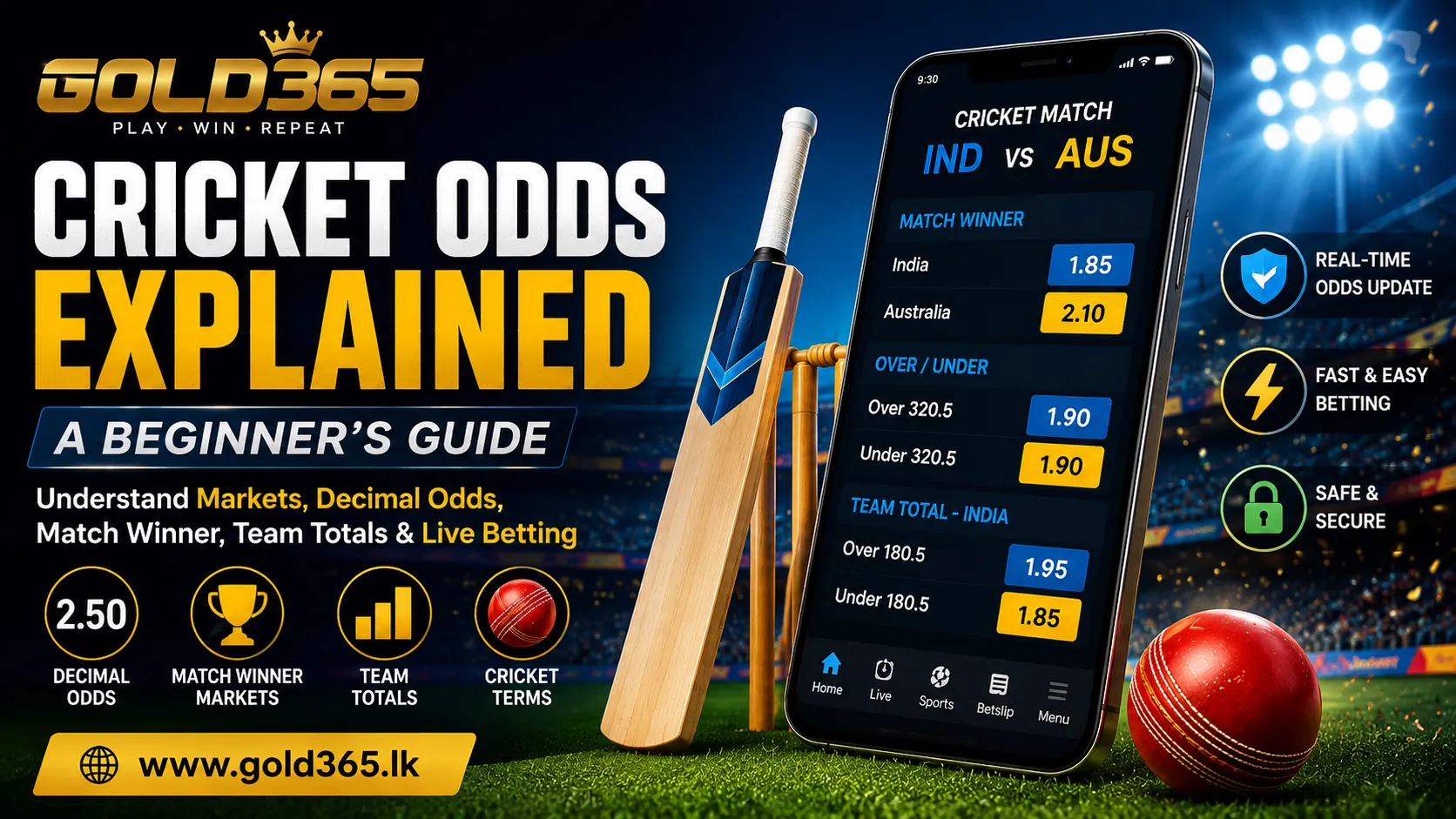
Gold365 Cricket Odds Explained
Cricket is one of the most popular sports worldwide, with formats ranging from fast-paced T20 matches to traditional Test cricket. Alongside the growing interest in the game, many fans search for information about cricket odds, match markets and live betting terminology. Understanding these terms can help readers interpret the information displayed on sports platforms and follow how market prices change during a match.
This Gold365 Cricket Odds Guide explains decimal odds, match-winner markets, team totals, over/under markets and commonly used cricket terminology in simple language. Whether you are new to cricket markets or want to understand the numbers displayed during a match, this guide covers the essential concepts with easy examples.
Odds are market prices, not predictions that guarantee an outcome. Cricket is unpredictable, and match conditions can change quickly.
What Are Cricket Odds?
Cricket odds are numerical values displayed in a betting market to represent the price associated with a particular outcome. They are commonly used in markets such as match winners, total runs, player performances and over-by-over events.
For example, a match-winner market may display separate decimal odds for Team A and Team B. These numbers indicate the market price for each selection. They can change depending on several factors, including team performance, player availability, pitch conditions and the progress of the match.
Understanding cricket odds starts with recognising how the numbers work. The most common format used by many online sports platforms is decimal odds.
Understanding Decimal Odds in Cricket
Decimal odds are a straightforward way to display the potential total return associated with a selection. They include the original stake in the displayed return.
For example, consider hypothetical decimal odds of 2.00. If someone places a stake of ₹100, the mathematical potential return would be ₹200 if the selected outcome occurs. This includes the original ₹100 stake, so the potential profit would be ₹100.
Here are a few simple examples:
| Decimal Odds | Example Stake | Potential Total Return | Potential Profit |
|---|---|---|---|
| 1.50 | ₹100 | ₹150 | ₹50 |
| 2.00 | ₹100 | ₹200 | ₹100 |
| 2.50 | ₹100 | ₹250 | ₹150 |
| 3.00 | ₹100 | ₹300 | ₹200 |
These figures are illustrations of decimal odds calculations, not recommendations or expected results. Actual market prices, settlement rules and available selections can vary.
How to Calculate Potential Returns
The basic formula for calculating a potential return using decimal odds is:
Potential Total Return = Stake × Decimal Odds
For example:
- Example stake: ₹100
- Decimal odds: 2.50
- Potential total return: ₹250
- Potential profit: ₹150
The calculation assumes the selection wins and the market is settled according to its stated rules. If the selection loses, the stake may be lost. Always read the relevant market terms before making any decision.
Common Cricket Betting Markets Explained
Cricket markets cover different aspects of a match. The available options can depend on the tournament, competition, match format and platform.
Here are some commonly used market types.
1. Match-Winner Market
The match-winner market is one of the most familiar cricket markets. It focuses on which team will win a particular match.
For example, a hypothetical match between India and Australia may display:
- India – 1.85
- Australia – 2.10
These numbers are illustrative decimal odds only. They do not confirm which team will win. The prices may reflect market expectations and can change as new information becomes available.
Factors such as team selection, injuries, toss results, pitch conditions and recent performances may influence the displayed odds.
2. Team Total Runs
A team total market relates to the number of runs scored by a particular team during a specified period or match.
For example, a hypothetical market might show a team total of 180.5 runs. Depending on the market rules, the available selections could relate to whether the team finishes above or below that figure.
Team totals can be influenced by:
- The number of overs available.
- Batting conditions and pitch behaviour.
- The quality of the opposition bowling attack.
- The batting order and player availability.
- Weather interruptions and revised match targets.
Always check whether a team total refers to a full innings, a particular session or another defined period.
3. Over/Under Markets
Over/under markets use a displayed numerical line. The selections generally relate to whether the final result will be above or below that line.
For example, a hypothetical market may display a total of 320.5 runs for a match. The two possible selections could be:
- Over 320.5: the settled total is higher than 320.5.
- Under 320.5: the settled total is lower than 320.5.
The actual settlement depends on the market description and rules. The half-point in this example avoids an exact whole-number result, but not every market uses half-point lines.
4. Top Batter Market
A top batter market relates to which player scores the most runs for a specified team or within a defined match category.
For example, a market might list several batters from a team. The result is determined by the applicable rules, including how ties, players who do not bat and abandoned matches are handled.
A player's batting position, recent form, playing conditions and the opposition bowling attack may all be relevant to understanding this market.
5. Top Bowler Market
A top bowler market generally focuses on which player takes the most wickets within a defined match or innings.
Important factors may include:
- The bowler's role in the team.
- Expected number of overs.
- Pitch and weather conditions.
- Opposition batting strength.
- Whether the bowler is selected in the playing XI.
Market rules should be checked carefully because different platforms may define qualifying wickets and tie settlements differently.
Understanding Live Cricket Odds
Live cricket odds are market prices displayed while a match is in progress. Unlike pre-match prices, live odds can change frequently as the game develops.
For example, imagine a team needs 45 runs from the final four overs. The market prices may change after a boundary, wicket, maiden over or other important event.
Common factors that influence live cricket odds include:
- Wickets: Losing a key batter can change the match situation.
- Run rate: The number of runs required compared with the overs remaining is important.
- Required run rate: This indicates the scoring rate needed by the chasing team.
- Partnerships: A strong partnership can change the match situation.
- Pitch conditions: The surface may become easier or more difficult for batting.
- Weather: Rain or interruptions can affect available overs and match calculations.
Live odds can move quickly, and a displayed price may change or become unavailable before a selection is confirmed. Following a live market does not make the final result predictable.
For more information about the sports section, visit the Gold365 Sports page.
Important Cricket Terms Every Beginner Should Know
Understanding cricket terminology makes it easier to follow match information and interpret market descriptions.
| Cricket Term | Meaning |
|---|---|
| Innings | A period during which a team bats. |
| Over | A set of six legal deliveries bowled by one bowler, subject to cricket rules. |
| Run Rate | The average number of runs scored per over. |
| Required Run Rate | The scoring rate needed by a chasing team to reach its target. |
| Powerplay | A period with specific fielding restrictions, depending on the format. |
| Wicket | The dismissal of a batter or, in some contexts, the set of stumps. |
| Maiden Over | An over in which no runs are scored off the bowler's deliveries, subject to scoring rules. |
| Boundary | Four runs when the ball reaches the boundary after touching the ground, or six when it clears the boundary without bouncing. |
| Toss | The pre-match decision that determines which team bats or bowls first. |
| Target | The number of runs a chasing team needs to score to win. |
| Tie | A result in which both teams finish with the same score under the applicable match rules. |
| No Result | A match in which no official winner is declared. |
These terms are useful when reading scorecards, match updates and cricket market descriptions.
Why Do Cricket Odds Change?
Cricket odds are not fixed throughout a match. Market prices may change as the available information and match situation develop.
Some common reasons include:
Team News and Player Availability
An unexpected change to the playing XI, an injury or the absence of a key player can influence market prices before a match begins.
Toss Results
The toss can affect the match strategy. Depending on the pitch, weather and format, the decision to bat or bowl first may influence how the market evaluates the teams.
Match Performance
Runs, wickets, partnerships, required run rates and remaining overs can all affect live market prices.
Weather and Pitch Conditions
Rain, moisture, dew and changing pitch conditions can influence scoring and bowling conditions. In limited-overs cricket, interruptions may also lead to revised targets under the applicable competition rules.
Market Activity
Prices may also move as market participants respond to new information and changing expectations. Therefore, odds should be understood as changing market prices rather than fixed statements about the result.
Cricket Odds Across Different Match Formats
The format of a cricket match can influence the type of markets available and the way match conditions develop.
T20 Cricket
T20 matches usually consist of 20 overs per side. The shorter format often features aggressive batting, frequent boundaries and quick changes in momentum.
One Day International (ODI)
ODI cricket generally consists of 50 overs per team. It combines longer batting periods with opportunities for changes in strategy throughout the innings.
Test Cricket
Test matches can last up to five days. Conditions, player endurance, pitch deterioration and changing match situations can influence how a Test develops.
The same market terminology may appear across formats, but the rules, available selections and match conditions can differ. For more cricket-related information, explore the Gold365 Sports section.
How to Read a Cricket Market Before Making a Decision
If you are viewing cricket market information, take time to understand what each selection actually represents.
Consider these basic points:
- Identify the market: Check whether it relates to the match winner, team total, player performance or another event.
- Read the displayed odds: Confirm whether the prices are shown in decimal format or another format.
- Check the conditions: Look for the number of overs, innings or period covered by the market.
- Review settlement rules: Understand how ties, abandoned matches, rain interruptions and other situations are handled.
- Check for updates: Team announcements, toss results and match developments can affect market information.
Never rely on a market name alone. Read the complete description and terms before interpreting a selection.
Gold365 Cricket: Exploring Cricket Information
Gold365 users looking for cricket-related information can explore the sports section to learn about available sports categories and market descriptions. Understanding cricket terminology, decimal odds and match formats can make it easier to interpret the information displayed on a sports platform.
You can visit the Gold365 homepage to explore the website, or check the Gold365 Sports page for sports-related information. Platform features, market availability and access conditions may change, so always refer to the current website information and applicable terms.
Frequently Asked Questions About Cricket Odds
1. What are cricket odds?
Cricket odds are numerical market prices associated with possible outcomes or events in a cricket match. They may be displayed in decimal or other formats, depending on the platform.
2. What do decimal odds mean?
Decimal odds show the potential total return for a given stake if a selection wins. For example, odds of 2.00 represent a potential total return of ₹200 on a hypothetical ₹100 stake, including the original stake.
3. What is a match-winner market?
A match-winner market relates to which team will win a particular cricket match. The available selections and settlement conditions depend on the market rules.
4. What are team total runs?
Team total runs markets relate to the number of runs scored by a specific team during a defined period, such as an innings or the full match.
5. Why do live cricket odds change?
Live odds can change due to wickets, runs, partnerships, remaining overs, player performance, weather interruptions and other developments during a match.
6. Are higher cricket odds a guarantee of a bigger win?
No. Higher decimal odds represent a larger potential return relative to the stake, but they do not guarantee an outcome. The possibility of losing the stake remains.
7. Can cricket odds be predicted accurately?
No method can guarantee accurate predictions of cricket results. The game involves uncertainty, and unexpected events can change a match at any time.
8. Where can I learn more about Gold365 cricket markets?
You can visit the Gold365 Sports page for sports-related information. Check the current website and market descriptions for the latest available details.
Responsible Gaming: Understand the Risks
Cricket should first and foremost be enjoyed as a sport. If you choose to participate in any form of real-money betting, understand that it involves financial risk and that you can lose the money you stake.
Keep these responsible gaming principles in mind:
- Only participate if you meet the legal age requirement in your location.
- Check whether online betting is legally permitted where you live.
- Set a spending limit and never exceed what you can afford to lose.
- Do not borrow money or use essential household funds for gambling.
- Avoid chasing losses or making rushed decisions during live matches.
- Take regular breaks and stop if gambling becomes stressful.
- Never treat betting as a reliable source of income.
If you feel that gambling is affecting your finances, relationships or well-being, stop and seek appropriate support.
Conclusion
Understanding cricket odds is an important first step for anyone who wants to interpret cricket market information. Decimal odds explain potential returns, match-winner markets focus on the result, team totals relate to runs scored, and live odds respond to developments during a match.
Learning terms such as run rate, required run rate, powerplay, innings and over can also make cricket scorecards and market descriptions easier to understand.
Use this Gold365 Cricket Odds Guide as an educational reference, read market conditions carefully and remember that no odds format can guarantee a cricket result. Always follow applicable laws and practise responsible gaming.